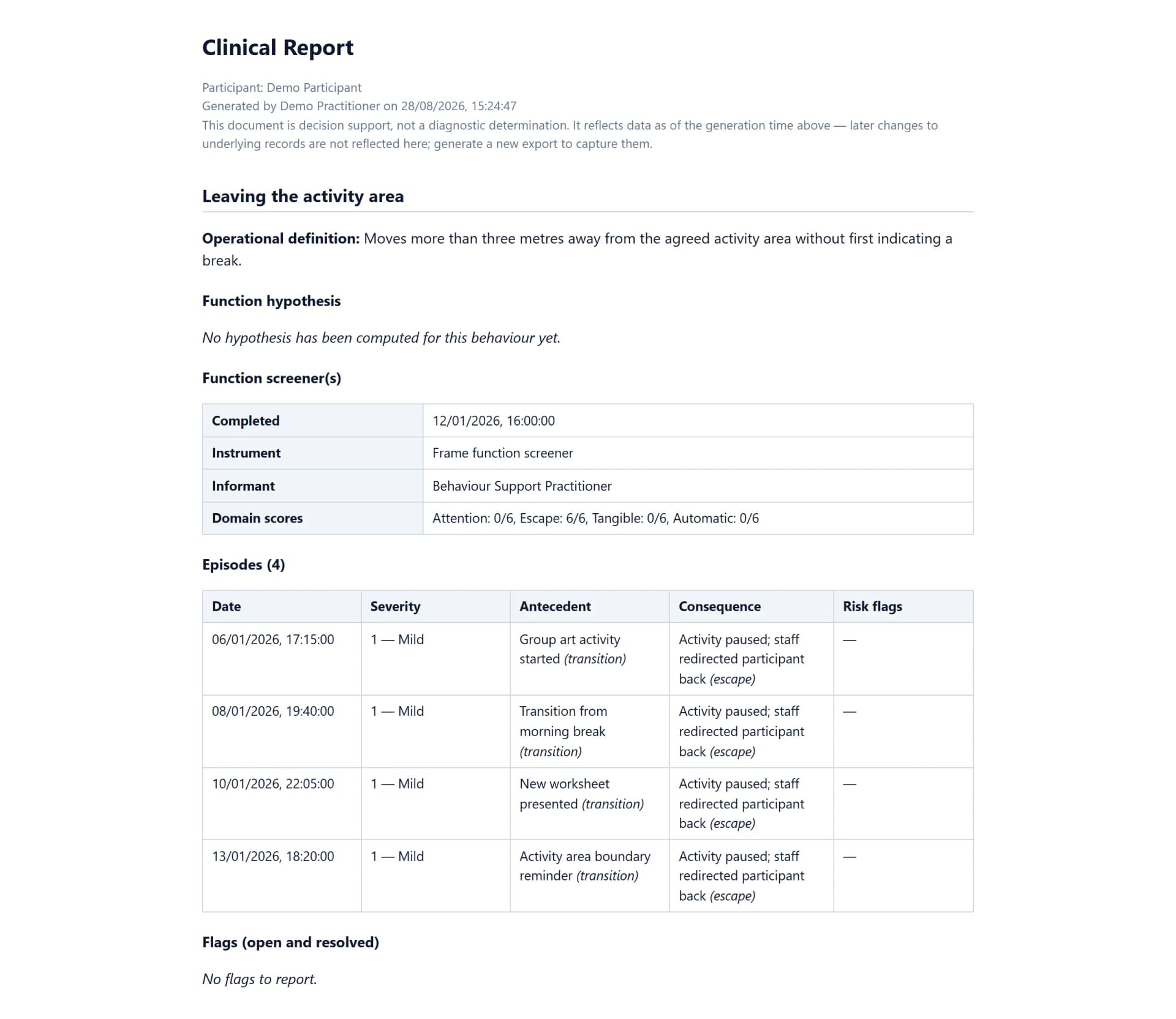
Clinical report
A detailed record including episodes, screeners, the current hypothesis and flags.
Define the behaviour. Record what happened. Bring structured screening and observed patterns together — then see where the evidence agrees, where it doesn't, and what needs a closer look.
Record what happened. Compare the evidence. Keep uncertainty visible.
Decision support for behaviour support practitioners.
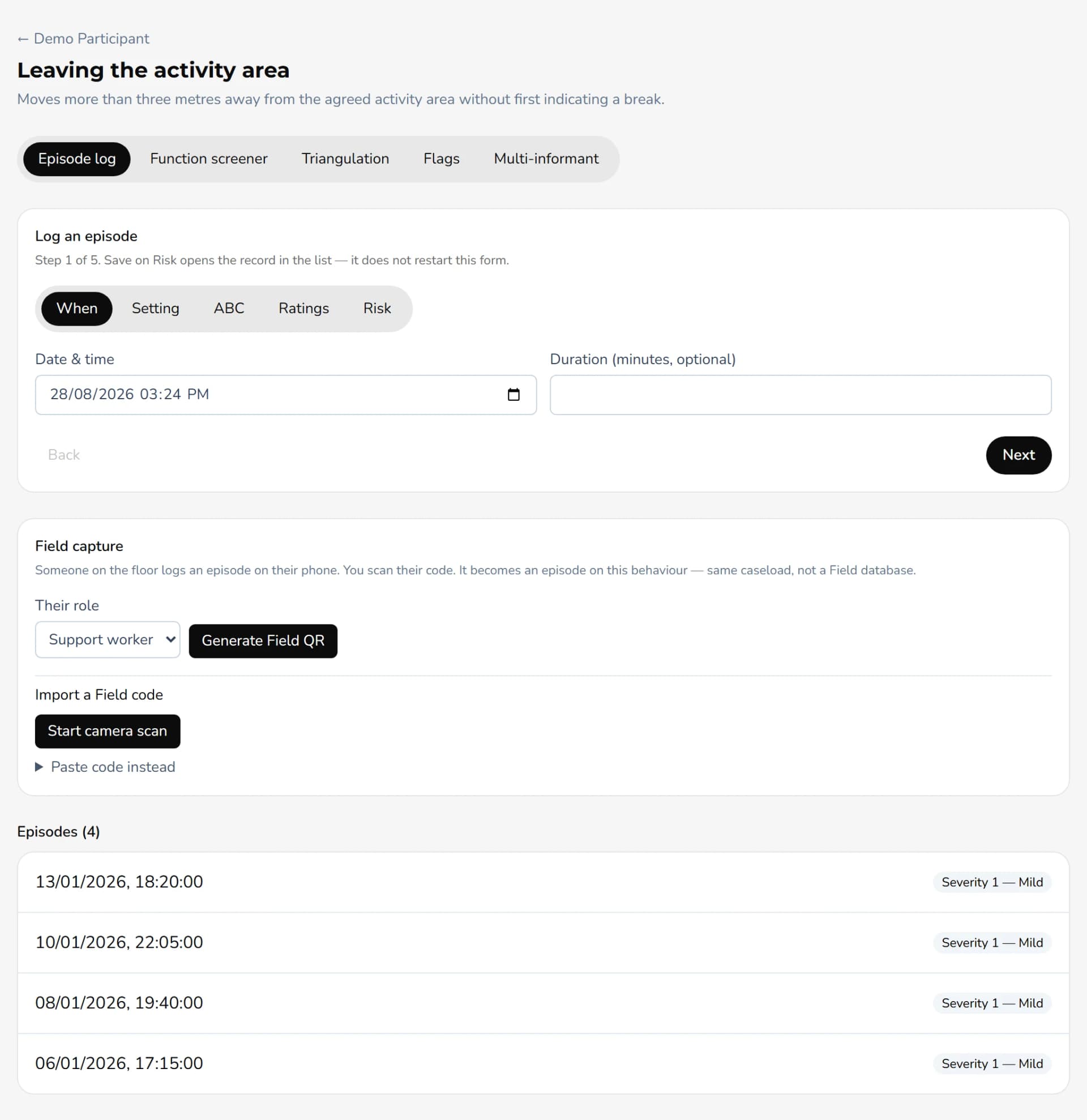
Operationally define the behaviour.
Record ABC / episode data and context.
Use structured function screening.
Bring observation and screener evidence together.
See confidence, disagreement and risk flags.
Turn the work into practitioner documentation.
Start with something observable.
Create a clear operational definition of the behaviour you are assessing.
Record what actually happened.
Log episodes with antecedents, consequences, setting events, severity and relevant risk information.
Add structured screening.
Complete Frame’s structured function screener yourself or gather another perspective from someone who knows the person.
Bring different evidence together.
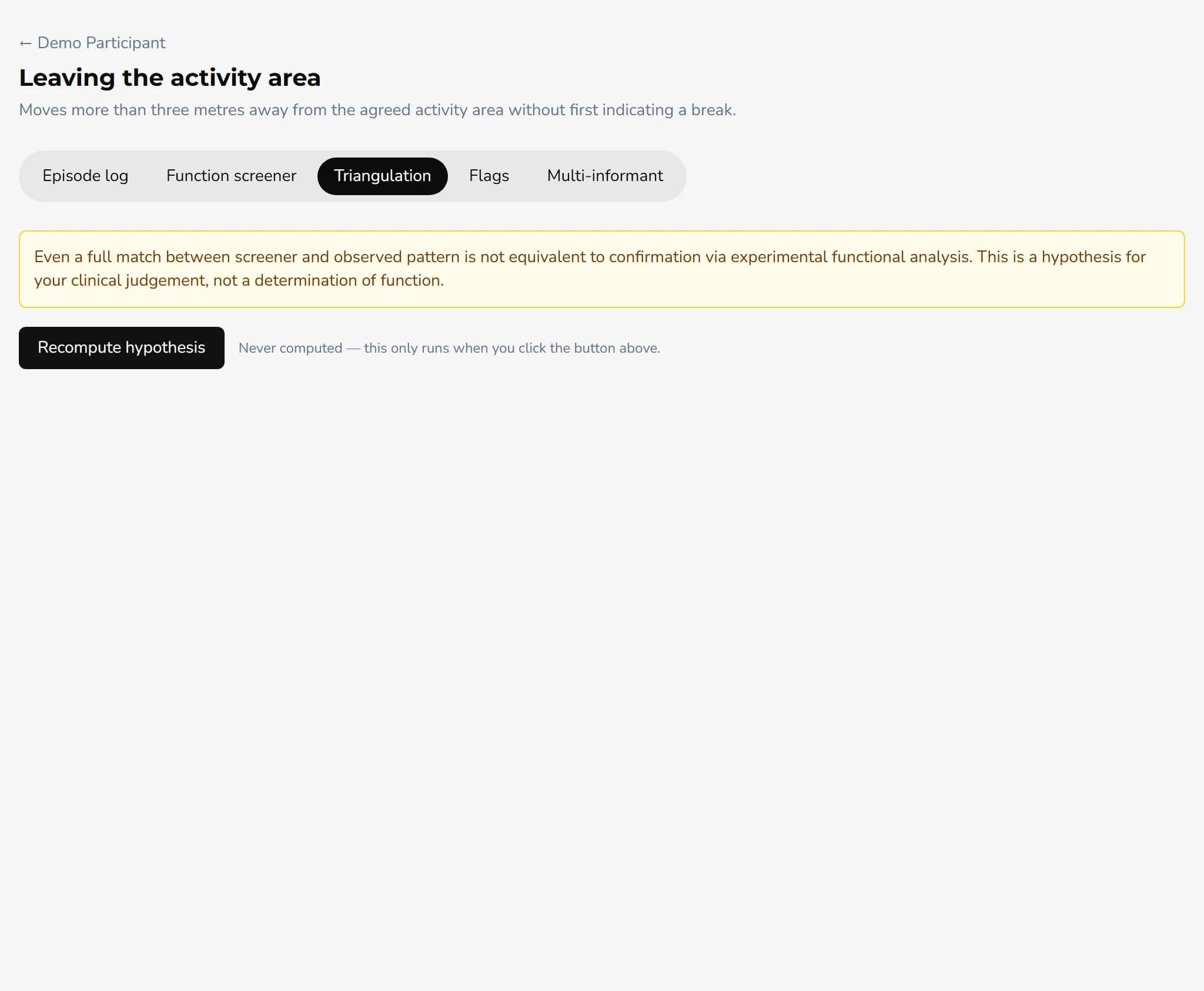
When the practitioner chooses to recompute a hypothesis, Frame compares screener results with patterns in recorded episodes.
See agreement and uncertainty.
Review agreement, mismatch, confidence, screener disagreement and unresolved flags without hiding the evidence underneath.
Turn the record into something usable.
Generate practitioner documentation from the evidence already recorded in Frame.
Frame doesn't give you a behavioural-function verdict. It shows the information that contributed to the current hypothesis: structured screener results, observed episode patterns, how much data was available, whether different sources agreed and the confidence attached to the result.
If the evidence is limited or contradictory, Frame keeps that uncertainty visible.
Practitioner interpretation required.
Invite a support worker, parent, sibling, teacher or other informant to complete the structured screener from their own phone.
No Frame account or app installation is required for the informant.
The invite contains no participant name, behaviour name or clinical record.
Frame is designed without a central participant database. The practitioner workspace stores its records locally in the browser, and the core product does not need to upload participant records to a central Frame server to work.
Working records are stored in the browser you are using.
The installed Frame web app can continue to work without a constant internet connection.
Practitioners can export and import a JSON backup.
Records remain under the practitioner’s control unless they choose to export or transfer them.
Browser storage can be cleared or lost, particularly when changing devices or browsers. Regular backups are recommended.
Frame can generate practitioner documentation from participant, behaviour, episode, screener, hypothesis and flag information already recorded in the workspace.
A detailed record including episodes, screeners, the current hypothesis and flags.
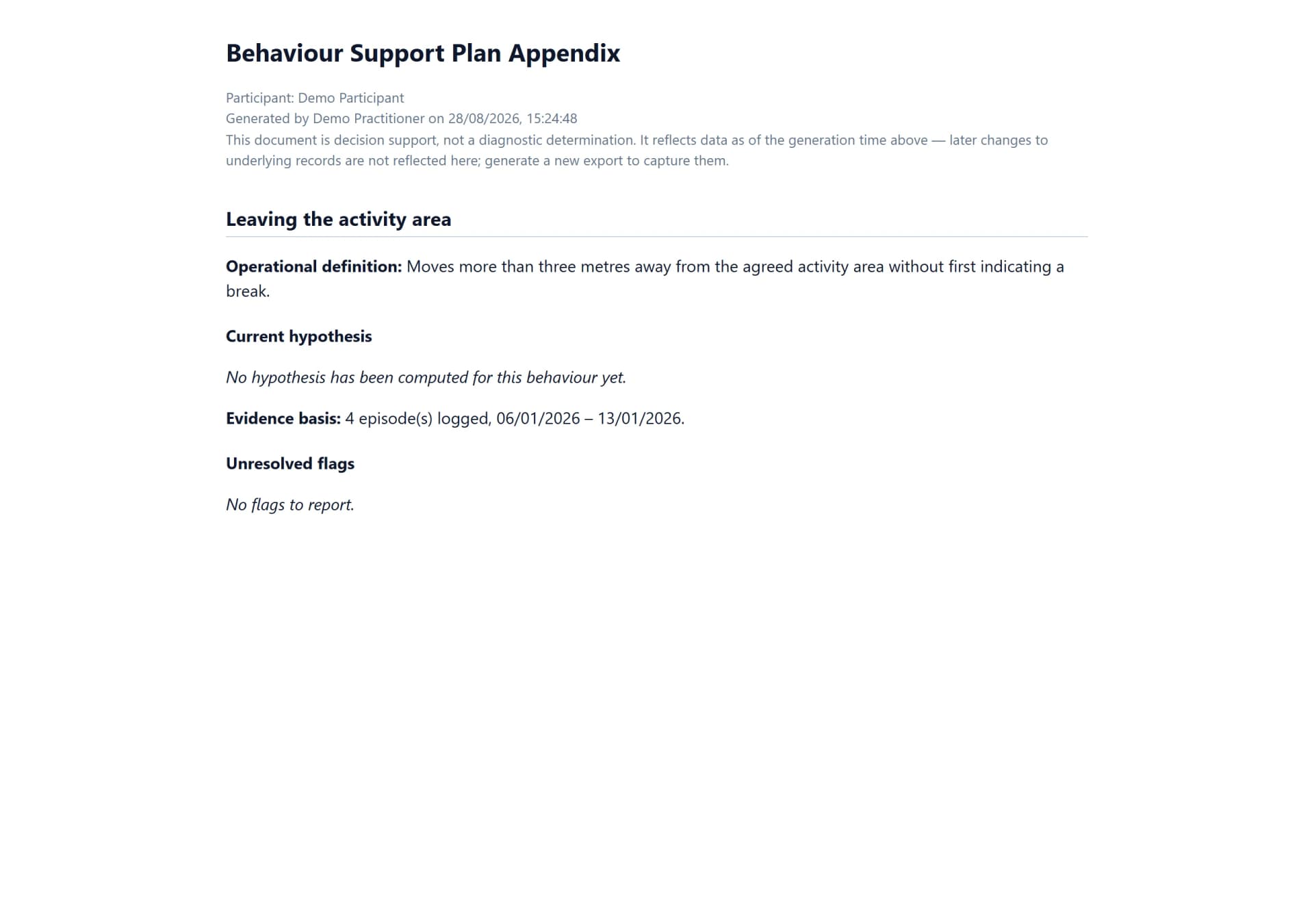
A condensed summary of the current evidence, hypothesis and unresolved flags for inclusion alongside behaviour support documentation.
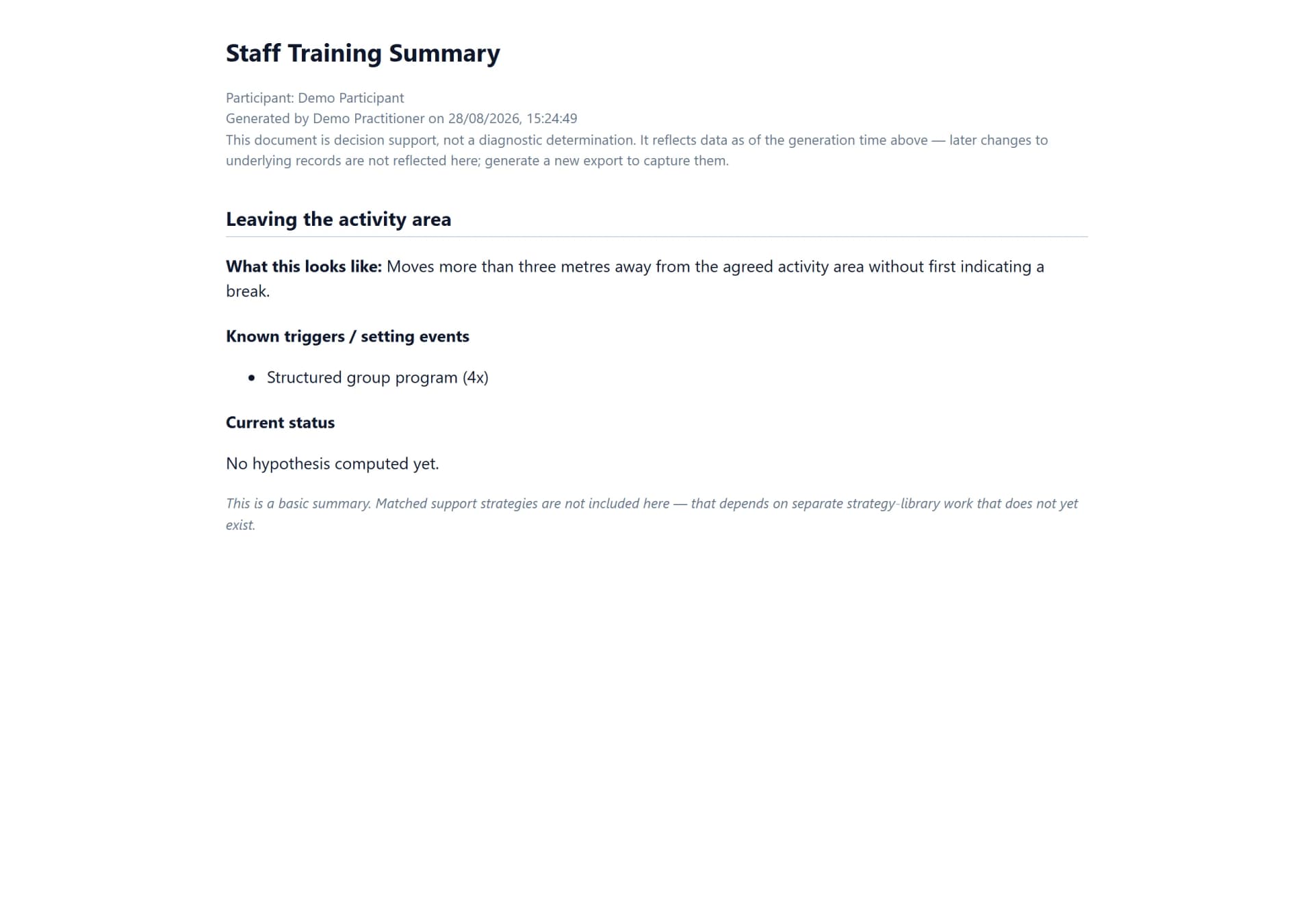
A simple overview of the behaviour, commonly recorded setting events, current hypothesis status and open flags.
The current staff-training summary does not generate matched support strategies.
Frame Free includes the core practitioner evidence workflow. Frame Pro adds multi-informant collection, practitioner documentation and unlimited participant workspaces.
Core behaviour-support evidence workflow.
Save A$58 annually.
14 days of Frame Pro · No card required
Everything in Free, plus:
Rule-based risk flags, JSON backup and export remain available in Frame Free. Downgrading does not remove your local participant records.
Your Frame plan can follow your account, but participant records remain local to the browser by default. Frame does not automatically sync participant records between devices.
Bring observations, structured screening and practitioner reasoning into one behaviour support workspace.