Clinical practice management, built around the work itself.
Arc is being built as a secure clinical CRM and practice management platform for allied health, behaviour support and disability service organisations.
It will bring client information, clinical documentation, assessments, evidence, service delivery, scheduling, compliance and multidisciplinary workflows into one connected workspace.
Arc is not yet available for clinical use. Early access only — please don't enter real participant or client information yet.
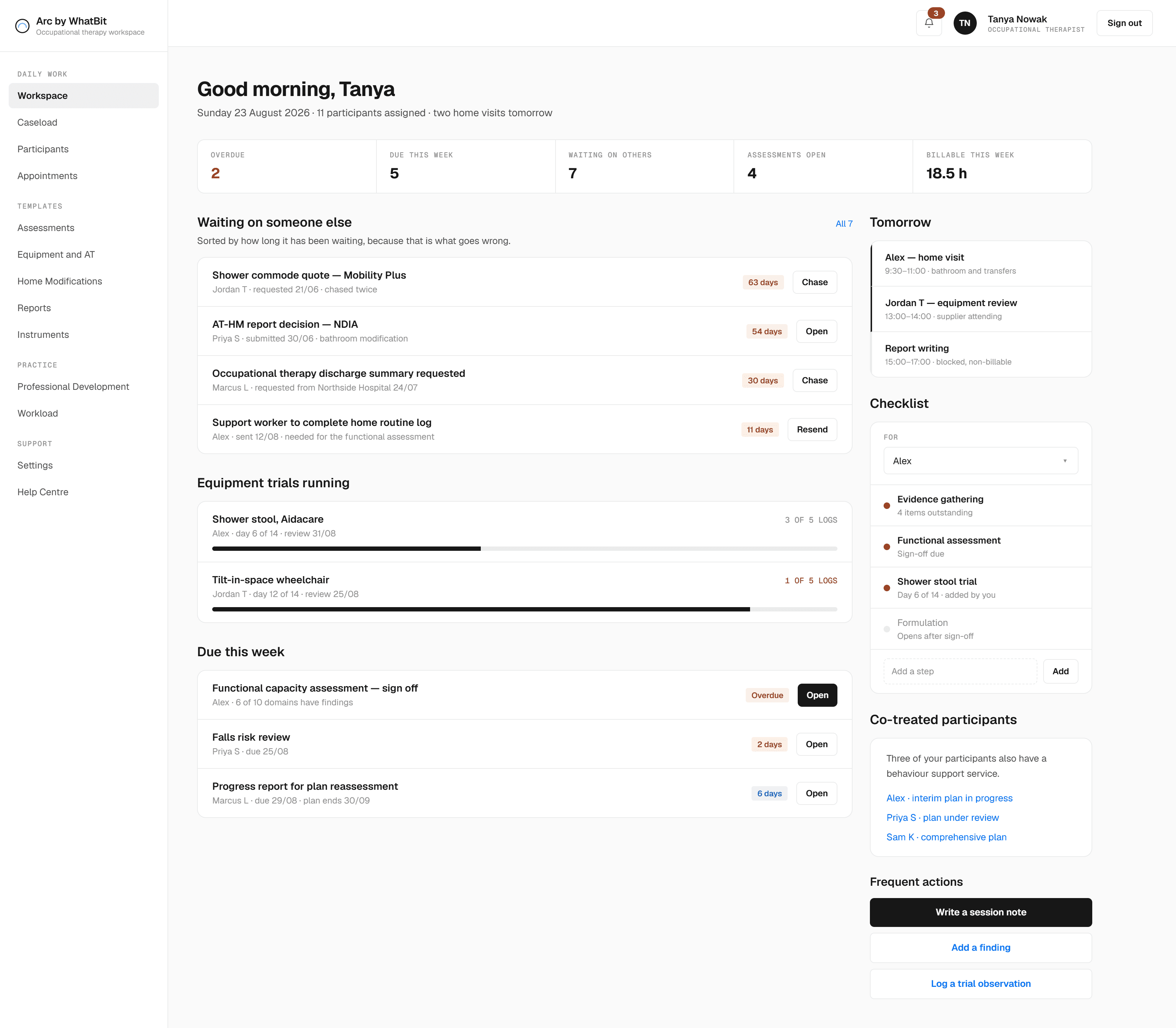
One platform instead of a patchwork of systems
Clinical teams are often forced to work across generic CRMs, calendars, spreadsheets, document templates, email, file storage and separate compliance systems.
The result is duplicated administration, fragmented client information and important clinical context spread across multiple places.
Client workspace
A single place for the information surrounding each client. Bring together:
The record develops with the person instead of becoming another collection of disconnected files.
Assessments — findings, evidence and sign-off in one place
Assessments that remain connected to care
Arc supports structured clinical assessment without reducing professional reasoning to a form.
Practitioners can collect information progressively, connect observations and evidence, collaborate across disciplines and carry relevant findings forward into planning and documentation.
Clinical judgement remains with the practitioner. Arc helps organise the evidence around it.
Documentation without losing context
Clinical notes, assessments, reports and supporting evidence sit within the same client environment. That means practitioners can spend less time searching through files and reconstructing history before they can do meaningful work.
Structured information can also be reused appropriately across workflows, reducing repetitive administration while maintaining traceability to its source.
Complex care rarely belongs to one practitioner.
Arc gives multidisciplinary teams a shared workspace while maintaining clear responsibilities, permissions and professional boundaries. Teams can understand:
Better coordination without turning everyone into administrators.
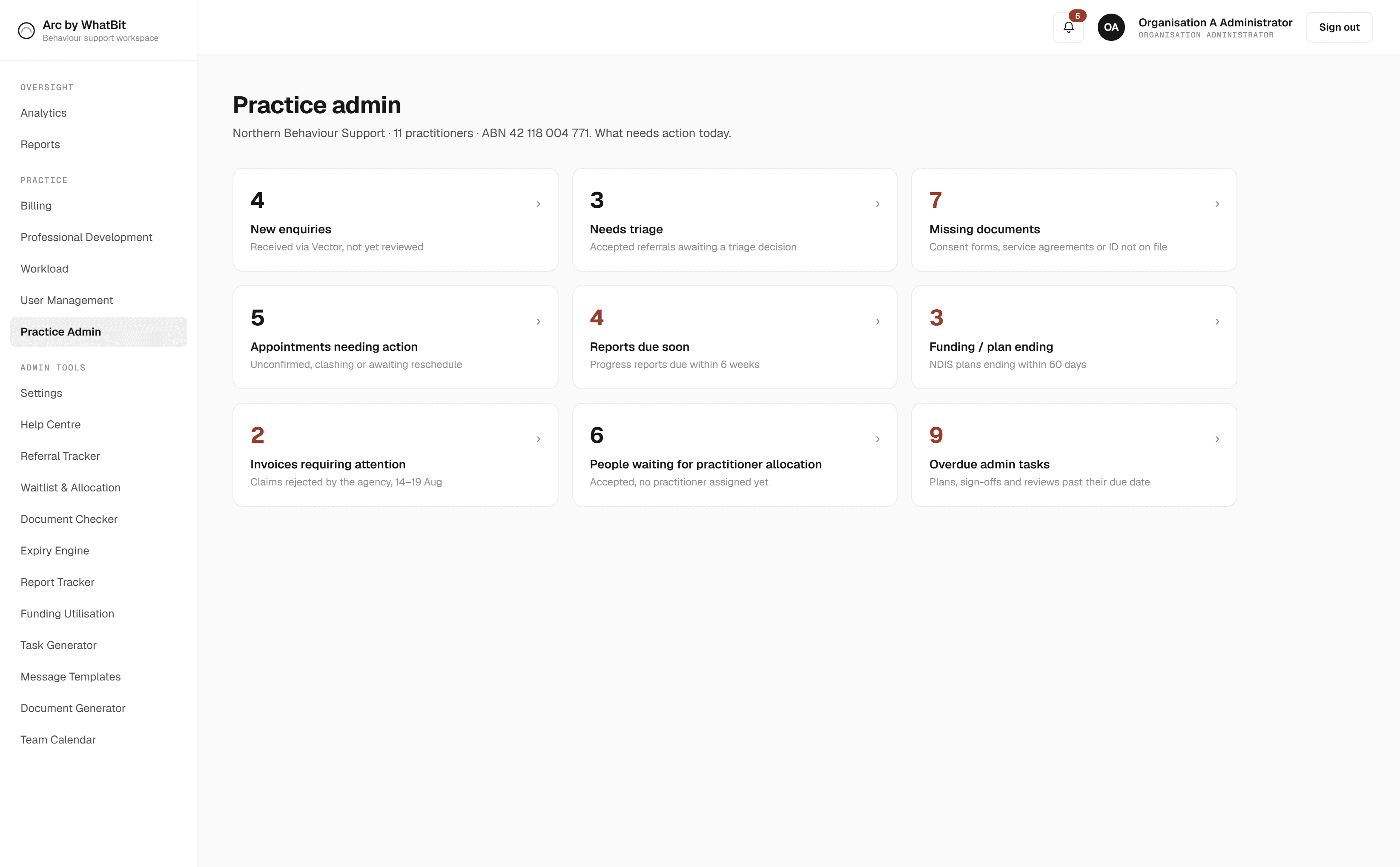
Evidence stays attached to the decision
Clinical information is more useful when its origin remains visible. Arc is being designed around traceable evidence, allowing information to remain connected to the assessment, observation, document or source that supports it.
Instead of producing isolated documents, Arc helps create a longitudinal clinical record that can be reviewed, updated and understood over time.
Arc starts with the client and connects the operational layer around them.
Most practice-management software starts with appointments and billing. Arc starts with the client.
Spend more time understanding and supporting people, and less time reconstructing information across systems.
Improve consistency, supervision, review and visibility across complex caseloads.
Connect clinical delivery with scheduling, workflow, governance, documentation and operational oversight.
Arc is being developed for organisations delivering:
It is particularly suited to services where information develops over time, multiple people contribute to the record, and decisions need to remain understandable long after they were made.
Security and privacy are part of the architecture
Clinical information deserves more than ordinary business-software security. Arc is being designed with privacy, access control, data protection and auditability as core platform requirements.
Organisations need to know not only that information is stored, but who can access it, where it came from and how it has been used.
Learn about security and privacy →People see the clients and records they're assigned to work with.
What can be viewed, edited and finalised is controlled separately.
Sensitive actions can require an extra verification step.
Exports and downloads are tracked back to who requested them.
Fits into the tools your practice already runs.
Assistance, not autonomous clinical decision-making
Arc can use intelligent tools to reduce repetitive work, organise information and help practitioners navigate large clinical records. It is not designed to replace professional judgement.
The practitioner remains responsible for clinical interpretation and decision-making. The technology supports the work rather than pretending to be the clinician.
A clinical operating system for modern practices
One connected environment for the clinical and operational work surrounding a person.
Without forcing organisations to assemble the workflow themselves from six different systems.
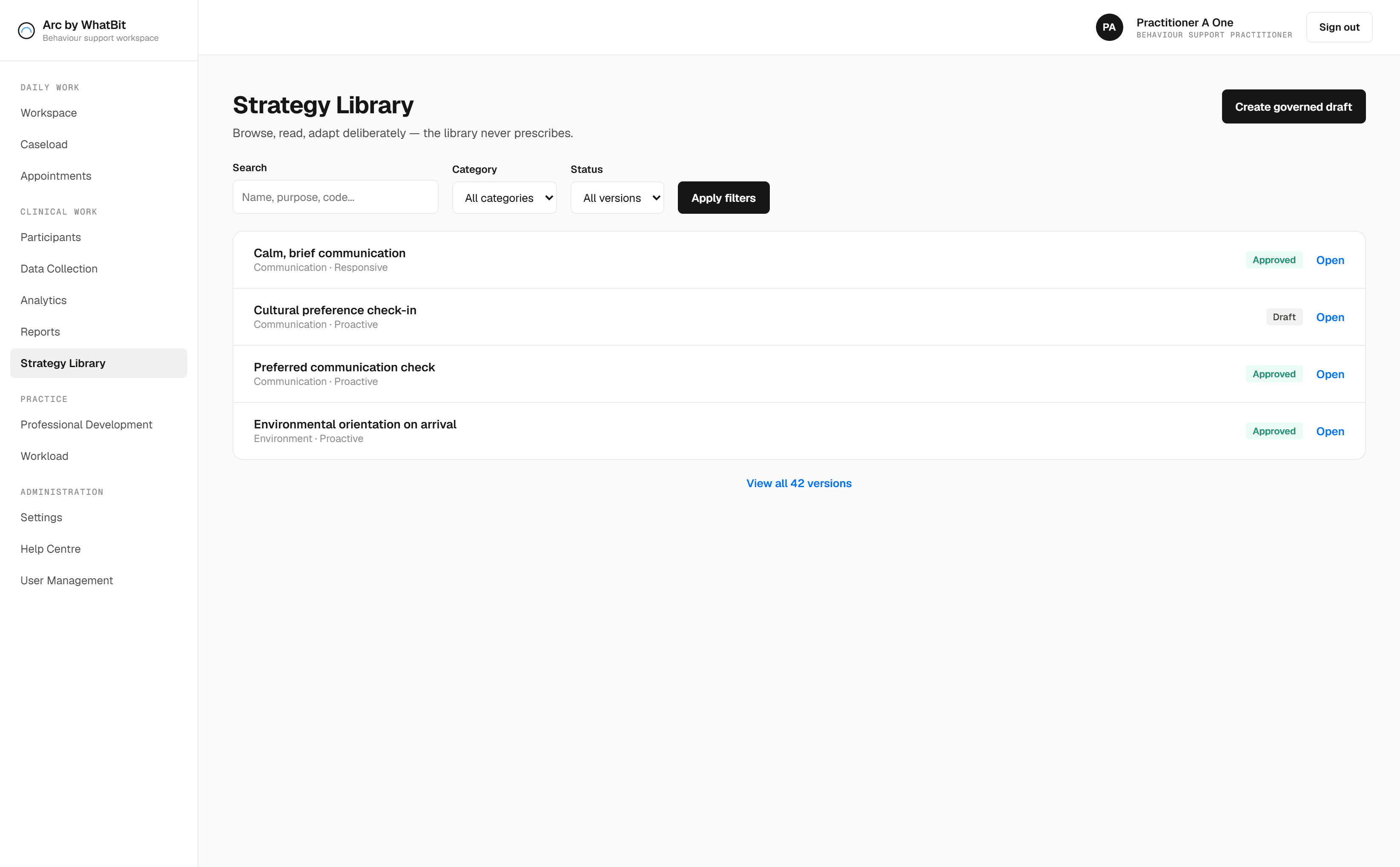
Join early access
Leave your email and we'll let you know as Arc becomes available to allied health, behaviour support and disability service organisations.